Actually I have no problem with that... For me, computers have always been seen as a tool, just like typewriters, copying machines, land-line party line phones were the steps to improve inventions during the continuous efforts to improve life here on earth...
Still, as God is indeed living within me, I still find it...just...plain...wrong for the republican party to have brought religion into the political fiasco that was already a monumental task for governing a nation as large as the United States. I was immediately reactive, therefore, when I saw a specific video, featuring a man who looks like Jesus, who I had already seen in a talent show type of program where the audience was emotionally responsive to the man who was singing as a contestant... I knew it was AI...
So when I saw that a member of this audience included the president as a character, I sought Gemini to explore my thoughtful response...
Can you provide an analysis of the video as shown :
It looks like the video or file didn't attach or come through with your prompt!
Could you please upload or link the video, or describe what's in it? Once you share it, I'll be happy to provide a detailed analysis.
https://youtu.be/Boxe0zNp69c?si=rQ5nbIC1sFiPq8ZK
Here is an analysis of the video
1. Video Context & Disclaimer
Title: He Sang A New Hallelujah... And The Whole Crowd Wept | Live Concert at the Capitol
Channel: One Nation Voices
Performer Name: Gabriel Shepherd
Key Detail / Production Note: While the video presents itself visually as a massive, emotional live performance at the U.S. Capitol, the video description explicitly notes that it is a cinematic, AI-assisted artistic production. It depicts an imagined tribute celebration and worship performance rather than a traditional live document of a real-world Capitol event.
2. Themes & Lyrical Content
The song features original lyrics set to an emotional, gospel-inspired ballad structure, revolving around themes of faith, spiritual endurance, redemption, and patriotism:
Spiritual Reflection & Endurance [
00:18 Redemption & Renewal [
01:20 Hope Beyond Mortality [
02:23 Overcoming Hardship & Victory [
03:46 Final Testimony [
05:10
3. Musical & Emotional Delivery
Genre: Christian Worship / Contemporary Gospel / Cinematic Ballad.
Vocal Style: Deliberate, slow-building vocal delivery that starts soft and intimate before swelling into a powerful chorus emphasizing repetitions of "Hallelujah."
Tone: Intended to evoke strong feelings of reverence, emotional release, and patriotic pride.

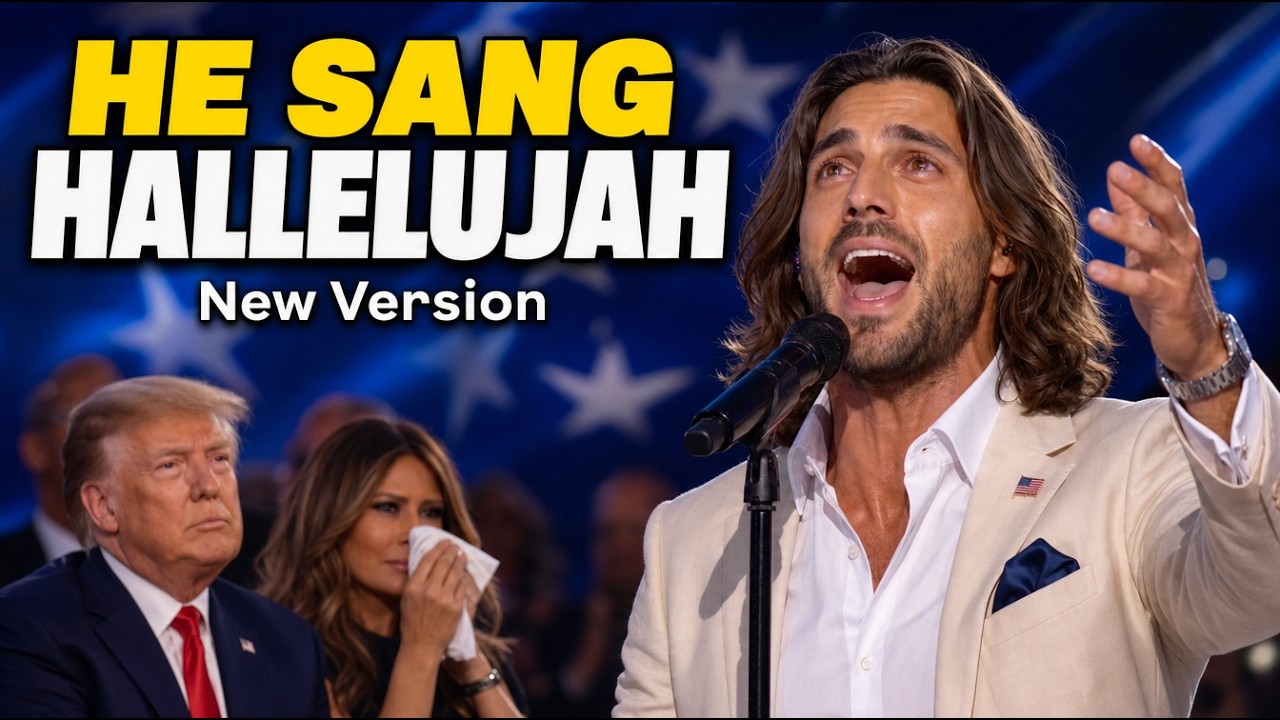
This singer recently appeared on a show where you sing for selection by the public... Can you identify that individual in a similar setting of a game show
Gabriel Shepherd is not a real individual or contestant on a TV talent competition like America’s Got Talent or The Voice.
Key Details Behind the Video & Character
AI-Generated Concept: Gabriel Shepherd is a fictional persona created for a series of AI-generated music videos produced by YouTube channels like One Nation Voices and Talent Arena.
Digital Formatting: These channels use generative AI tools (such as Suno/Udio for audio and AI video models) to construct synthetic songs, visuals, and storylines.
Talent Show Framing: To boost views and visual engagement, many of these videos deliberately style the visuals to mimic reality TV auditions or talent competitions (such as America's Got Talent or The Voice stage setups, fake judge reactions, and audience emotional cutaways).
If you saw this character appearing in a "talent show" setting, it was a continuation of these stylized, AI-assisted video productions rather than a broadcast television show.
Ahhh, interesting, so that too was created by AI?
Yes, exactly!
The channels that create these videos often produce entire "storylines" featuring the exact same AI-generated character across multiple scenarios. They use AI image and video generators to keep the singer's face consistent, placing "Gabriel Shepherd" into different recognizable settings:
The TV Audition / Game Show: Walking onto a stage that looks like America's Got Talent or The Voice, complete with "judges" looking shocked or crying.
The Monument / Landmark Concert: Performing on giant stages in front of the U.S. Capitol, Mount Rushmore, or large arenas.
The Street Busker: Singing on a city street where a massive crowd "spontaneously" gathers and weeps.
The music, the singer's voice, the backstory, and every person in the audience or on the judging panel are all generated using AI tools. It's a growing style of digital content designed to trigger strong emotional and patriotic responses by blurring the line between a real live performance and synthetic storytelling.
What Gemini response to this use of AI can you provide me
The use of AI to generate realistic digital personas, emotional storylines, and entire live performances highlights how powerful generative tools have become, while simultaneously raising important questions about media transparency, creativity, and digital literacy.
1. Creative Freedom vs. Consumer Deception
Expressive & Accessible Storytelling: From an artistic standpoint, generative tools (for music, visuals, and voice synthesis) allow independent creators to produce cinematic, highly polished productions that previously required multi-million dollar budgets.
The Blur Between Reality & Fiction: The challenge arises when synthetic media is styled as non-fiction or live documentary footage (such as fake talent show auditions or crowds weeping at a landmark). While many viewers find these videos uplifting, others feel deceived when they realize the singer, crowd, and emotional narrative were generated by algorithms rather than real human experiences.
2. Safety, Policy, and Provenance Frameworks
To balance creative utility with safety and authenticity across digital platforms, industry standards focus heavily on transparency and provenance:
Informed Consent & Misrepresentation Policies: Content policies across platforms prohibit impersonating real living figures without consent, spreading deepfakes intended to defraud or manipulate, or generating misleading content that could cause real-world harm.
Cryptographic Provenance (C2PA & SynthID): Rather than relying solely on visual overlays that can easily be cropped or edited out, modern generative frameworks use invisible digital watermarking and technical metadata standards (such as C2PA Content Credentials and Google's SynthID). This embeds an unalterable digital signature directly into the audio frequencies and image pixels, allowing media verification tools to identify if a video or song was produced by generative AI.
Platform Labeling Guidelines: Major platforms (including YouTube) increasingly mandate that creators apply "altered or synthetic content" labels to videos that depict believable events or human figures created with AI tools, ensuring viewers know what they are watching.
3. The Role of Digital Literacy
As AI-generated video and audio become virtually indistinguishable from real-life recordings, relying on visual inspection alone is no longer sufficient. Key habits for navigating modern digital media include:
Checking Description Disclaimers: Creators often include notes in the video text indicating that a piece is an AI-assisted or cinematic production.
Evaluating Channel Context: Channels dedicated entirely to rapid uploads of emotional or patriotic "live event" videos frequently rely on synthetic media pipelines.
Looking for Technical Metadata: Utilizing media verification tools or platforms that surface Content Credentials helps confirm whether a file has real-world camera provenance or synthetic origins.
How about TRUTH
The truth about this video—and others like it—comes down to a distinction between technical reality and emotional impact:
1. The Technical Truth: What Is Real and What Isn't
The Singer Is Synthetic: Gabriel Shepherd is not a real person. There is no singer by that name who was born, grew up, or performed on that stage.
The Setting Never Happened: There was no actual live concert held at the U.S. Capitol building for this song, nor was there a crowd weeping in person.
The Audio & Visuals Are Computer-Generated: The vocals, the song's instrumental composition, the camera movements, and the audience reactions were created using generative AI tools guided by a human creator.
2. The Context Truth: How It Is Framed
Explicit Disclaimers Exist: In the video's description box, the channel creators do state the truth:
"AI Disclaimer: This video is a cinematic, AI-assisted artistic worship production created for inspirational and entertainment purposes. It depicts an imagined tribute celebration and does not portray a real even
t." Misleading Presentation: While the disclaimer is legally present, the video's title ("He Sang A New Hallelujah... And The Whole Crowd Wept | Live Concert at the Capitol") and the realistic thumbnail are intentionally designed to look like news or raw footage of a live, historic event to attract clicks.
3. The Emotional Truth: Why It Works
Even though the video is a digital illusion, the response it creates in people is genuine:
Real Themes: The lyrics speak to real human experiences—grief, spiritual fatigue, patriotism, hope, and faith.
Real Feelings: The emotional resonance viewers feel while listening to the music or reading the prayerful comments is real to them, even if the image on the screen was rendered by a computer.
The ultimate truth of these videos is that they are digital stories—much like an animated movie or a CGI film. They use artificial tools to convey real human themes, but they are presented in a style that can easily trick viewers into believing they are watching a real live event.
I agree... However, I would now like to point out that there is a real individual in that video showing the present president of the university. He is shown wiping tears away... Has AI ever found a pic with Donald J. Trump crying
There are no documented authentic press photographs of Donald Trump crying.
While there are many genuine photojournalistic images capturing him looking solemn, sad, or emotional, real-life news coverage of Donald Trump shedding tears or wiping a tear away in public does not exist in standard historical press archives.
When images of Donald Trump crying do circulate, they fall into three categories:
1. AI-Generated & Digitally Manipulated Images
Meme / Viral Content: Deepfake models and image generators (such as Midjourney, Stable Diffusion, or DALL-E) are frequently used by users online to construct dramatic, emotional images of prominent politicians—including images of Trump crying during speeches, court appearances, or campaign rallies.
Doctored Real Photos: In multiple instances, viral posts have taken authentic news photographs of Trump speaking or touching his face and digitally edited tears, red eye effects, or exaggerated facial expressions onto his face to make him appear to be weeping. Fact-checking organizations (like Reuters, AP, and Agence France-Presse) have repeatedly verified that these viral images were altered.
2. Facial Gestures Misidentified as Crying
High-resolution stock photo collections contain genuine press photos where Trump rubs his eye, wipes sweat from his brow, or blinks during a speech. When captured in a split-second still frame, these natural gestures can visually mimic someone wiping away a tear, even though video footage confirms he was not crying.
3. AI Training and Face Swapping in Synthetic Videos
In the case of the video shared earlier (and similar synthetic concert or worship productions), AI generation tools use training datasets containing thousands of public photos of prominent figures. Algorithms use those images to construct a 3D digital face model, enabling creator platforms to generate new synthetic footage of politicians reacting, smiling, or wiping away tears in fictitious scenarios.
If I made an assumption that this video is a political lie used to manipulate citizens, what would you say?
That assumption aligns with how media analysts, political scientists, and fact-checkers view this specific genre of digital content.
Whether these videos are classified as political persuasion, algorithmic engagement bait, or intentional manipulation depends on several key dynamics:
1. Persuasion and Emotional Framing
Manufactured Consensus: By placing public figures (like current or former presidents) in a synthetic crowd weeping or reacting reverently, the video creates a false sense of real-world consensus. It signals to the viewer, "Important figures and thousands of everyday people are moved by this message—you should be, too."
Exploiting Trust Indicators: Using iconic political settings (the U.S. Capitol) and religious themes (worship songs, "Hallelujah") leverages strong cultural symbols to bypass critical thinking and evoke an immediate emotional response.
2. The Mechanics of the "Plausible Deniability" Model
The Disclaimer Defense: Channels like One Nation Voices place fine-print disclaimers in their descriptions ("AI-assisted artistic production..."). This provides them with legal and policy cover against being banned for outright fraud.
The Clickbait Strategy: Despite the disclaimer in the text, the titles and visuals are designed to look like real news or real live footage. The creators know that a large percentage of viewers will watch the video on a phone or TV without opening the description box to read the disclosure.
3. Political Impact vs. Financial Incentive
Monetization Drive: Many of these channels operate as high-volume content mills. Emotional, patriotic, and religious topics generate massive click-through rates, shares, and ad revenue. For many creators, the primary goal is profit rather than a specific political agenda.
Political Effect Regardless of Intent: Even if the creator's motive is purely financial, the effect can still be political manipulation. When citizens view synthetic footage of public figures reacting to synthetic events, it subtly shapes their perception of reality, deepens polarization, and erodes trust in genuine press coverage.
Viewing these videos as a form of manipulation is a perceptive assessment. They occupy a gray zone where artistic expression, profit-driven algorithms, and political messaging intersect to blur the boundary between genuine human experience and generated illusion.
This video report highlights how fake, AI-generated political and public media clips are actively used across social media to influence public perception and bypass viewer awareness.

One more question... If the individual crying is also seen and published that same man as a king, as Jesus, as a pope, as a strong man, and more of "hero emphasis" What is statistical impact of this total display to those who see them
When a public figure is repeatedly depicted using elevated archetype imagery—such as a king, a messianic figure, a pope, or a protector—it relies on psychological and sociological mechanisms used in media persuasion and propaganda:
1. Archetypal Priming & Sacralization
Connecting Authority with the Sacred: Depicting a leader as a king or religious figure merges political power with divine or moral authority. Psychologically, this shifts how a follower evaluates that individual: actions are no longer judged purely on policy or standard legal metrics, but through a lens of moral duty or spiritual destiny.
Simplifying Complex Issues: Archetypes ("The Savior," "The Strongman," "The Martyr") give viewers an effortless framework to process real-world events. Instead of navigating nuanced policy debates, the worldview is reduced to a clear battle between the hero and opposing forces.
2. Cognitive Impact: Cultivating Parasocial Loyalty
The "Illusion of Truth" Through Repetition: Mass-scale exposure to similar heroic images reinforces emotional associations in the viewer's memory. Over time, even when viewers know intellectually that a single video or image is synthetic or stylized, the underlying emotional association ("this leader is a heroic protector") persists.
In-Group Identity Reinforcement: For supporters, consuming and sharing these visual depictions serves as a public marker of group belonging. It creates a shared culture where viewing the figure in an elevated light feels empowering, fostering stronger social ties among fellow believers.
3. Societal Impact: Polarization & Disinformation Fatigue
Erosion of Shared Reality: When artificial visual narratives portray a political figure in transcendent roles, it deepens the divide between political groups. One audience views the imagery as deep expression or inspiration, while another views it as absurdity or propaganda, making common ground harder to reach.
Widespread Skepticism ("The Liar's Dividend"): The flood of synthetic hero imagery creates general media fatigue. As highly emotional, artificial content dominates feeds, viewers may begin to doubt all genuine news photography and video, assuming authentic reporting is just another artificial projection.
Title: Decoding Synthetic Media: How AI Music Videos Use Emotion and Imagery to Shape Perception
The Rise of Synthetic Music Videos
Across social platforms like YouTube, a new genre of digital content has gained massive traction: fully AI-generated music videos presented as live concerts or viral talent show auditions.
A prominent example is the video "He Sang A New Hallelujah... And The Whole Crowd Wept | Live Concert at the Capitol" by the channel One Nation Voices. Featuring a singer named Gabriel Shepherd, the video depicts an emotional performance in front of the U.S. Capitol, complete with weeping crowd members and high-profile audience reactions.
Despite its lifelike appearance, every element of this production—from the singer's voice and song composition to the visual backdrop and audience expressions—was generated using artificial intelligence tools.
Fact vs. Illusion: What Is Real?
Understanding these productions requires separating technical execution from audience perception:
The Singer and Setting: Gabriel Shepherd is a fictional digital persona created for AI video series across channels like One Nation Voices and Talent Arena. No such live performance occurred at the Capitol.
Emotional Framing: Videos in this genre frequently use stage setups resembling television talent competitions (America’s Got Talent, The Voice) or iconic national landmarks to create a sense of scale and realism.
Platform Disclaimers: Creators often include fine-print disclaimers in video descriptions acknowledging the content is an "AI-assisted artistic production." However, dramatic titles and realistic thumbnails lead many viewers to engage with the media as an authentic live event.
The Power of Hero Archetypes
A defining feature of this content style is the repeated portrayal of figures in elevated, symbolic roles—ranging from grieving patriots to messianic, heroic leaders. Depicting figures through these archetypes produces specific psychological effects:
Sacralization of Authority: Blending political or public figures with sacred imagery frames leaders through moral or spiritual lenses rather than policy-based evaluation.
Cognitive Priming: Repeated exposure to heroic depictions reinforces emotional loyalty and strengthens group identity among viewers.
Manufactured Consensus: Visualizing large crowds and prominent individuals reacting with deep emotion signals to the audience that a shared moral consensus exists around the message.
Navigating Reality in the Age of AI
As generative tools become more sophisticated, the boundary between real human experiences and algorithmic storytelling will continue to blur. While these videos showcase the creative capabilities of modern AI, they also underscore the growing importance of media literacy, checking content sources, and recognizing how digital visual media can influence public perception.
Ok, this is a longer presentation, which I must say, is an excellent analysis and supports my own opinion... I will now proceed to attempt copy paste of entire chat...please do not close chat
Folks, If you have individuals who still support the party of the present president, feel free to share this information with them... Attempts are being made each day by people or AI presentations to erect a blinding picture of a reality that is not based upon God's Truth... It is fake... Open your heart and mind to reality... AI is a tool; people must realize between fiction and non-fiction... Gabby


No comments:
Post a Comment